
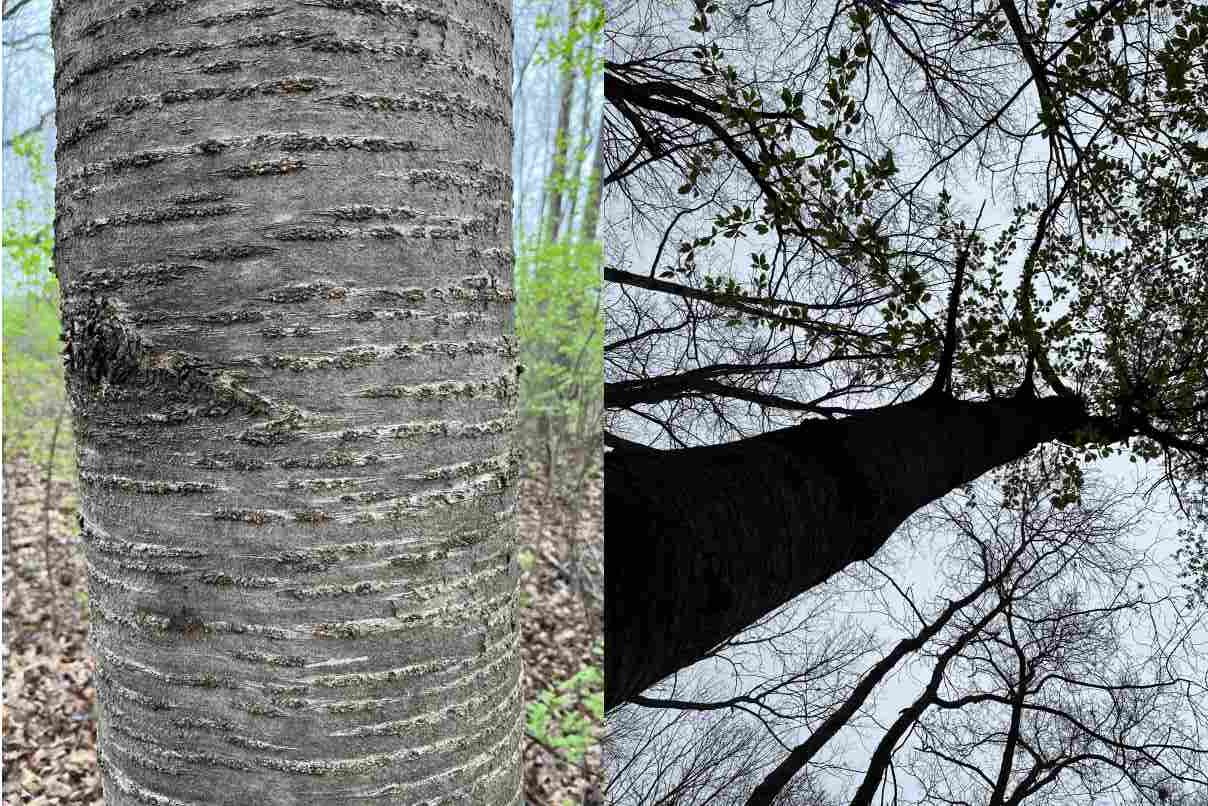
Wild cherry (Prunus Avium – Wikipedia) is native to western Eurasia and naturalized elsewhere. The bark is smooth reddish-brown with prominent horizontal grey-brown horizontal lines on young trees, becoming thick dark blackish-brown and fissured on old trees.
The leaves are alternate single egg shaped (simple ovoid-acute), 2-3/4 to 5-1/2 inches long and 1-1/2 to 2-3/4 inch wide, slightly shiny green on top and finely downy on the bottom. The tip of each serrated edge of the leaves also contain small red glands. In the fall, the leaves turn orange, pink or red.
Wild cherry flowers are small, white, five-petaled blossoms that often covering the tree in early spring. Growing in clusters on long stalks, these fragrant, delicate flowers are a vital early nectar source for bees and pollinators, later developing into edible, small red-to-dark-purple cherries.
Wild cherries are small, edible drupes from 2/5 to 1 inch that turn bright red to dark purple berries when ripe in midsummer. They have a single large stone, a tart-to-bitter taste, and are used in jams, jellies, and wines. They are common in North American woodlands, often found along edges.
Leave a Reply